Key Holder Setup Troubleshooting Guide - CarInteriorMix
A key holder sounds like a simple accessory?until it starts slipping, rattling, blocking a switch, or leaving sticky residue on your dash. Whether you?re installing a magnetic mount, a clip-on organizer for your visor, a key bowl in the center console, or a wall-mounted holder in the garage, a ?set it and forget it? setup usually doesn?t stay that way in a real car environment.
Heat cycles, textured plastics, leather surfaces, vibration, and the constant in-and-out routine of daily driving all punish weak adhesives and flimsy hardware. If your key holder fails, it?s more than an annoyance: keys become a distraction, they can scratch trim, and in the worst cases they can interfere with airbags, steering, or pedals.
This guide walks through the most common key holder types used in and around vehicles, the problems owners run into, and how to fix them with practical, step-by-step troubleshooting. You?ll also find product-style recommendations, common mistakes to avoid, and a quick FAQ at the end.
What ?Key Holder? Means in a Car Context
Car owners use ?key holder? to describe a few different setups. Troubleshooting starts by identifying which one you have:
- Interior adhesive mounts: Stick-on hooks, clips, or small trays mounted to dash, center console, or lower trim.
- Magnetic key holders: Magnetic pads/plates that secure keys or a key fob (usually with a metal plate added to the fob case).
- Vent/visor/seat rail attachments: Clip-on holders that rely on spring tension rather than adhesive.
- Center console organizers: Insert trays that add a dedicated key/fob pocket.
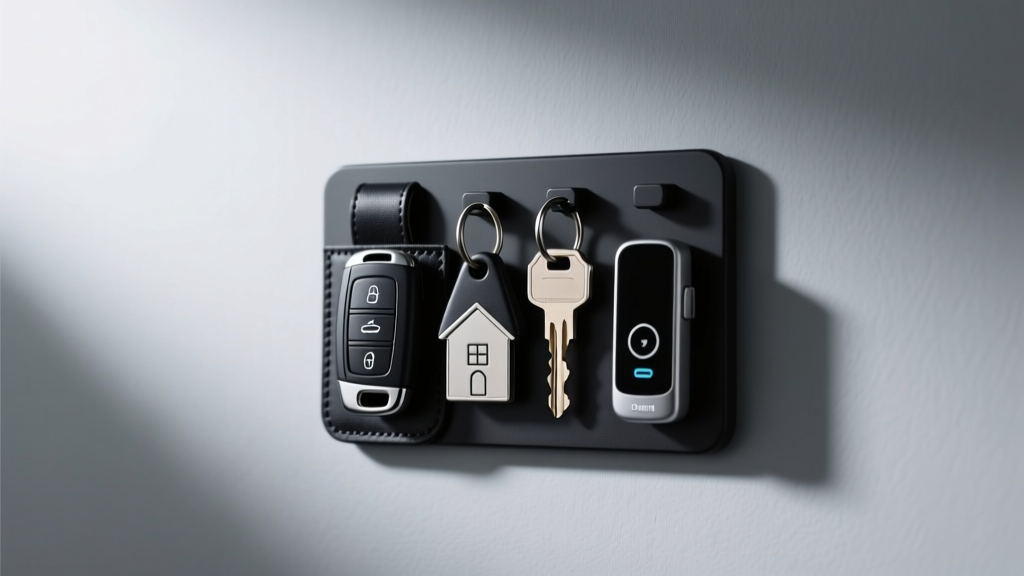
- Garage/entry key holders: Wall-mounted hooks or magnetic strips to stage keys before you get in the car.
Each type fails for different reasons. Adhesives hate heat and oily plastics, magnets can cause rattles and alignment issues, and clip-ons can damage vents or loosen over time.
Quick Diagnostic Checklist (Before You Rip It Off)
Run through these checks first?you?ll often spot the real cause in 60 seconds:
- Surface type: Smooth hard plastic vs. textured plastic vs. leather/vinyl vs. soft-touch coating.
- Temperature history: Has the car been sitting in sun? Cabin temps can exceed 140�F (60�C).
- Load: Are you hanging a single fob or a heavy key ring with multiple keys and tools?
- Vibration source: Holder near HVAC vents, on thin trim, or on a panel that flexes?
- Interference: Does it block a button, shifter travel, knee airbag area, or steering column movement?
- Adhesive age: Many tapes cure over 24?72 hours. If you used it immediately, it may never have bonded properly.
Common Key Holder Problems and How to Fix Them
Problem 1: Adhesive Won?t Stick (or Falls Off After a Few Days)
This is the #1 complaint with interior key holders. The usual culprits are oily interior dressings, textured surfaces, soft-touch coatings, or heat.
Step-by-step fix
- Remove the holder cleanly: Use dental floss or fishing line to ?saw? behind it. Warm it gently with a hairdryer to soften tape.
- Strip old adhesive: Roll off residue with your thumb or use an interior-safe adhesive remover. Avoid soaking seams or switches.
- Degrease properly: Wipe the mounting area with 70% isopropyl alcohol on a lint-free cloth. Repeat until the cloth comes away clean.
- Choose a better mounting zone: Pick a rigid, flatter area. Avoid heavily textured grain, rubberized coatings, and areas that flex when pressed.
- Upgrade the tape: Replace generic tape with quality automotive-grade acrylic foam tape. Apply firm pressure for 30?60 seconds.
- Let it cure: Keep the car parked (or at least avoid loading the holder) for 24 hours; 48?72 hours is ideal in cooler climates.
Practical tip
- If your dash has aggressive texture, consider a console insert tray or a clip-on holder instead of adhesive. Texture reduces contact area, which reduces bond strength.
Problem 2: The Holder Slides, Tilts, or Slowly Peels at the Edges
This usually means the tape is creeping under heat, the holder is overloaded, or it?s mounted on a slightly curved surface.
Step-by-step fix
- Weigh your key ring: If it?s heavy (multiple metal keys, tools, bottle opener, etc.), lighten it. Modern cars often only need the fob and maybe one backup key.
- Reposition to a flatter area: Even a small curve can cause edge peel over time.
- Use wider tape or a larger base: A broader footprint spreads load and resists peel forces.
- Orient for shear, not peel: Adhesives hold best when weight pulls parallel to the tape (shear). A hook that pulls outward encourages peel.
Real-world example
A common mistake is mounting a small hook low on the center console where a passenger?s knee bumps it. The repeated side load makes the tape creep and the hook gradually rotates. Moving it inside the console cubby or using an insert tray fixes the issue without fighting physics.
Problem 3: Rattling, Buzzing, or Vibrations While Driving
Keys love to make noise?especially when they contact hard plastic panels. Rattles can also sound like suspension or dash issues, so it?s worth addressing.
Step-by-step fix
- Confirm the source: Drive on a rough road and lightly touch the holder. If the sound changes, you?ve found it.
- Add soft contact points: Apply thin felt pads where keys touch plastic, or add a rubberized sleeve to the holder.
- Reduce metal-on-metal: Swap split rings for a quieter key organizer, or use a silicone key fob cover.
- Stabilize the mount: If the holder itself vibrates, it may be on a flexible trim piece. Relocate to a more rigid panel or switch to a console tray.
Problem 4: Magnetic Key Holder Isn?t Holding Reliably
Magnetic mounts can be excellent, but only if the magnet is strong enough and the metal plate is aligned. Some fobs are bulky and don?t sit flat, which reduces magnetic contact.
Step-by-step fix
- Check plate placement: The plate should sit flat and centered on the fob case. If it?s crooked or on a curve, it will slip.
- Clean both surfaces: Oils reduce friction, making the fob slide even if the magnet is strong.
- Increase friction: Add a thin rubber film (some kits include it) between plate and mount to stop sliding.
- Upgrade magnet strength: Look for mounts that specify neodymium magnets and include anti-slip pads.
- Avoid heat-sensitive adhesives: If the magnetic base is taped to the dash, use automotive-grade acrylic foam tape and allow cure time.
Safety note
Keep any holder?magnetic or otherwise?out of airbag deployment zones (steering wheel, A-pillars, passenger dash airbag area, and knee airbag panels). A ?secure? accessory can become a projectile if mounted in the wrong place.
Problem 5: Holder Blocks Controls, Gets in the Way, or Creates Distractions
If you have to look away from the road to dock or retrieve your keys, the location is wrong.
Step-by-step fix
- Reassess your goal: Do you need a ?holder? at all, or just a dedicated place where keys don?t scratch things?
- Move it to a low-effort zone: Common good spots are inside the center console, a console tray pocket, or a small cubby near the shifter?assuming it doesn?t interfere with shifting.
- Do a clearance test: With the car parked, run the shifter through all positions, adjust the steering wheel, and check knee clearance.
- Minimize visual clutter: Keys hanging in plain view can reflect in glossy trim and catch your eye at night.
Problem 6: Trim Damage, Marks, or Sticky Residue
Some adhesives pull soft-touch coatings, leave a ?shadow,? or stain textured plastics?especially if interior protectants were used.
Step-by-step fix
- Remove gently with heat: Warm the adhesive with a hairdryer, then peel slowly at a low angle.
- Use residue remover carefully: Test on an unseen area first. Apply to a cloth, not directly onto the panel.
- Restore the finish: Clean with a mild interior cleaner, then wipe dry. Avoid shiny dressings on high-touch areas.
- Switch mounting method: If your trim is delicate (soft-touch, piano black, leather), a console organizer tray is typically safer than adhesives.
Recommended Key Holder Types (What Works Best Where)
Rather than naming a single ?best? product, it helps to match the holder style to your interior and routine.
Best for daily drivers: Center console organizer tray
- Why it works: No adhesives, no rattling hooks, and keys stay contained.
- Look for: Non-slip lining, a dedicated fob pocket, and OEM-like fitment for your vehicle.
- Ideal for: Anyone who carries a fob plus a few keys and wants a clean interior.
Best for minimalists: Magnetic dock (high quality only)
- Why it works: Quick one-hand docking, especially if you prefer not to toss the fob into a bin.
- Look for: Neodymium magnets, anti-slip pad, and automotive-grade adhesive base.
- Ideal for: Drivers with a light key setup (just the fob) and a stable mounting surface.
Best for rentals/leased vehicles: Clip-on or insert solutions
- Why it works: No permanent modifications and no adhesive residue.
- Look for: Soft contact surfaces so clips don?t mar trim or vents.
- Ideal for: Leaseholders and anyone who changes vehicles often.
Best at home: Wall-mounted key holder with a ?launch pad? tray
- Why it works: Prevents the ?Where are my keys?? problem and reduces the urge to store keys loosely inside the car.
- Look for: Screw-mounted hooks (not just adhesive), a tray for sunglasses, and enough spacing between hooks.
- Ideal for: Families with multiple drivers and multiple fobs.
Step-by-Step: A Reliable Key Holder Setup (That Doesn?t Fail in Summer Heat)
If you?re starting fresh or reinstalling after a failure, use this repeatable process.
- Pick a safe location:
- Away from airbags (A-pillars, passenger dash, steering wheel area, knee panels)
- Not near pedals or steering column joints
- Not blocking HVAC controls, shifter movement, or drive mode buttons
- Choose the right mounting method:
- Textured/soft-touch surfaces: favor insert trays or clips
- Smooth rigid plastics: adhesive mounts can work well
- Clean like a detailer: Use isopropyl alcohol and a lint-free cloth. If you?ve used interior dressing, clean twice.
- Dry fit first: Sit in the driver?s seat and simulate grabbing/docking keys. Make sure it?s comfortable and doesn?t create distraction.
- Install with pressure: Press firmly across the entire base (30?60 seconds). Don?t just press the center.
- Respect cure time: Avoid loading it for 24 hours minimum.
- Do a ?rattle test?: Tap the holder, then take a quick drive. Add felt or adjust position if needed.
- Re-check after a week: Look for edge peel, shifting, or new squeaks before it becomes a bigger problem.
Common Mistakes to Avoid
- Mounting in an airbag zone: This is the most serious mistake. If you?re unsure, relocate it.
- Sticking to dirty or dressed surfaces: Interior shine products often leave silicones that defeat adhesive.
- Hanging a heavy ?janitor ring?: Extra keys add noise, wear ignition cylinders (on older cars), and overload mounts.
- Mounting on flexible trim: If the panel flexes when you press it, adhesive will fail sooner.
- Ignoring heat: What holds at 70�F may slide at 130�F cabin temperature.
- Using super glue on interior trim: It can fog plastics, stain surfaces, and make removal destructive.
FAQ: Key Holder Setup Troubleshooting
Will a key holder drain my battery or affect keyless entry?
A holder itself won?t drain the battery, but storing a smart key very close to the vehicle can keep systems ?awake? in some models. If your car supports passive entry, avoid leaving the fob inside the car or right next to it overnight. At home, store keys a few meters away from the vehicle when possible.
What?s the best adhesive for a car interior key holder?
Automotive-grade acrylic foam tape is the most reliable for interior mounting on smooth, rigid plastics. Generic double-sided tape often fails in heat. Whatever you use, surface prep and cure time matter as much as the tape brand.
Can I mount a key holder on leather or soft-touch dash material?
It?s not recommended. Adhesives may not bond well and can damage the finish when removed. A center console organizer tray or a non-marring clip-on solution is usually a better choice for leather or rubberized coatings.
Why does my magnetic key holder keep sliding even though it feels strong?
Sliding is usually a friction problem, not a magnet problem. Oils on the fob, a curved surface, or a smooth metal plate can let the fob drift under vibration. Clean both surfaces and add an anti-slip pad or rubber layer to increase grip.
My keys rattle no matter where I put them?what?s the cleanest fix?
Downsize your key ring and use a key organizer or a silicone fob cover. Pair that with a lined console tray or a pocket with a rubber mat. Reducing metal-on-metal contact is the fastest way to quiet things down.
Is it okay to hang keys from a vent clip holder?
It can work for lightweight fobs, but heavy keys can stress vent fins and cause squeaks. If you use a vent clip, choose one with a wide, padded grip and keep the load minimal.
Wrap-Up: A Trouble-Free Setup You?ll Actually Keep
The best key holder setup is the one that stays put in summer heat, doesn?t rattle on rough roads, and doesn?t interfere with controls or airbags. If your current holder is failing, start by upgrading surface prep and placement, then choose a mounting style that matches your interior materials. For many drivers, a simple center console organizer tray beats adhesive hooks every time.
Next steps: check your holder location for safety clearance, clean the mounting surface properly, and run a one-week follow-up to catch peeling or rattles early. For more practical interior upgrades and troubleshooting tips, explore the latest guides on carinteriormix.com.